
It is the kind of thing that pulls you out of a deep sleep. Your child wakes up crying, holding the front of their shins or the backs of their knees, telling you their legs hurt. By morning, they are racing around the kitchen as if nothing happened. If this sounds familiar, you are almost certainly dealing with growing pains, one of the most common reasons parents across the Des Moines area bring their kids in with aching legs.
Growing pains affect a large share of children, most often between the ages of 3 and 12. They can be unsettling to watch, especially at night when everything feels a little more serious. The good news is that growing pains are usually harmless and tend to fade as a child gets older. Even so, it helps to know exactly what they are, how to ease them, and the warning signs that mean it is time to have your child checked.
What are growing pains?
Growing pains are aching or throbbing pains, usually felt in both legs, that tend to show up in the late afternoon, the evening, or the middle of the night. They most often settle in the muscles of the thighs, the calves, or behind the knees rather than in the joints themselves. Despite the name, growing pains are not actually caused by bones growing. There is no good evidence that the rate of a child’s growth is what makes the legs hurt. The label has simply stuck because the pains are most common during the busy childhood years.
Doctors consider growing pains a benign condition, which means they are not a sign of disease or lasting harm. They come and go, often appearing for a few nights, disappearing for weeks, and then returning without warning.
Are growing pains real?
Yes. Growing pains are a recognized and well documented pattern, even though the name is a little misleading. Your child is not imagining the discomfort, and they are not simply looking for attention. The pain is genuine, even when there is nothing visibly wrong with the leg.
What confuses many parents is the contrast between the night and the morning. A child can be in real tears at ten at night and completely fine at breakfast. That pattern is one of the classic features of growing pains, and it is part of what separates them from problems that need medical attention.
What do growing pains feel like?
Children tend to describe growing pains in a few consistent ways:
- An aching, cramping, or throbbing feeling, usually in both legs at once
- Pain in the muscles of the calves, thighs, or behind the knees, not in the joints
- Discomfort that appears in the evening or wakes the child from sleep
- Legs that feel completely normal again by morning
- No swelling, redness, limping, or warmth in the area
Some children also get a headache or a stomachache along with the leg pain. The discomfort can range from mild to strong enough to wake a child from a sound sleep, which is often the part that worries parents the most.
What causes growing pains in children?
The honest answer is that the exact cause is not fully understood. The leading explanation is that active days simply tire out young muscles. Running, jumping, climbing, and playing hard can leave the legs sore in much the same way an adult feels after an unusually busy day. Children who are very physically active sometimes report more frequent episodes.
A few other factors come up often in discussions of growing pains:
- Muscle fatigue after a long day of running and playing
- A lower pain threshold in some children, especially when they are tired in the evening
- Possible links to more flexible or hypermobile joints
- Fewer distractions at night, which makes mild aches feel more noticeable
What matters for parents is that growing pains are not linked to serious illness and do not cause any lasting damage to the legs.
How can you relieve growing pains at night?
Most growing pains respond well to simple comfort measures at home. The goal is to soothe tired muscles and help your child settle back to sleep:
- Gentle massage. Rubbing the sore muscles is one of the most effective and reassuring things you can do.
- Warmth. A warm bath before bed or a warm (not hot) compress on the legs can help the muscles relax.
- Light stretching. Easy calf and thigh stretches during the day may reduce how often the pains show up.
- Daytime movement and hydration. Staying active and well hydrated supports healthy, comfortable muscles.
- Reassurance. Your calm presence tells your child that everything is okay, which matters more than parents often realize.
If your child has frequent episodes, keeping a short log of when the pain happens, how long it lasts, and what seems to help can be useful both for you and for any professional you decide to see.
When should you worry about your child’s leg pain?
This is the question that keeps parents up at night, and it is an important one. True growing pains are predictable. They come and go, affect both legs, and leave no trace by morning. Some signs, though, do not fit that pattern and deserve a professional evaluation. Talk with your pediatrician, or bring your child in to be checked, if you notice any of the following:
- Pain in one leg only, or in a single spot that is tender to the touch
- Pain that is still there in the morning or that lingers through the day
- Limping, or a child who refuses to walk or put weight on a leg
- Swelling, redness, warmth, or a visible injury
- Fever, weight loss, unusual tiredness, or a child who simply seems unwell
- Pain in the joints rather than in the muscles
- Pain that keeps getting worse over days or weeks
None of these signs automatically means something is seriously wrong, but each is the body’s way of saying this is worth a closer look. When in doubt, it is always reasonable to have your child evaluated.
Can chiropractic care help with growing pains?
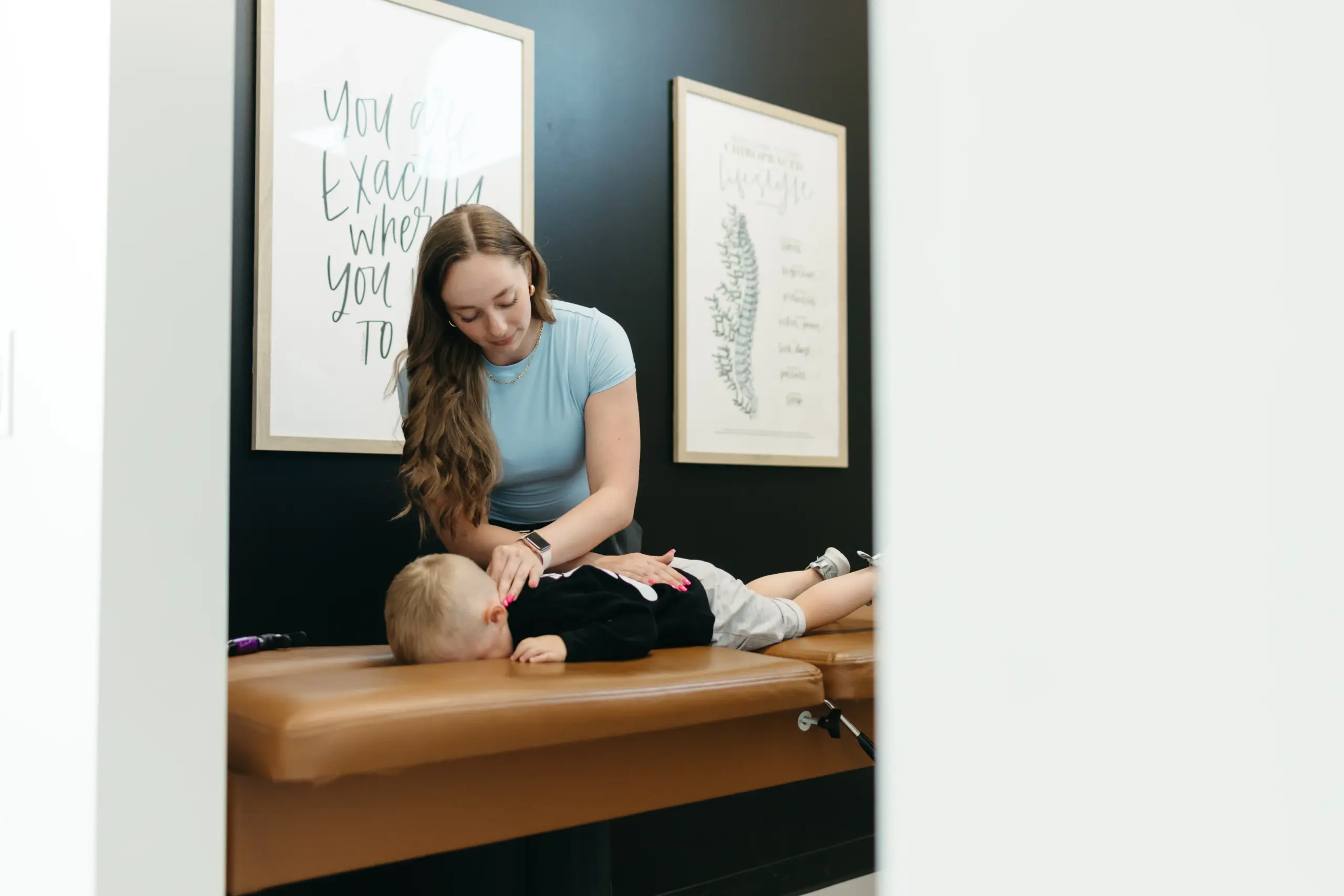
For many families, chiropractic care is part of a broader approach to keeping active children comfortable and moving well. Growing pains usually resolve on their own, but a gentle pediatric evaluation can help in a few practical ways. A trained chiropractor can look at how your child is moving, check their posture and gait, and confirm that the discomfort fits the pattern of ordinary growing pains rather than something that calls for a different kind of care.
At Thrive Family Chiropractic, pediatric care is gentle and tailored to a child’s size and age. The focus is on comfortable movement, balanced posture, and a nervous system that is working the way it should, all of which support an active kid through the busy growing years. Chiropractic care is not a cure for growing pains, and it does not replace your pediatrician, but it can be a helpful part of a family’s overall wellness routine.
If you are not sure whether your child’s symptoms call for a visit, our guide on when your child should see a chiropractor walks through the most common reasons families bring their kids in. You can also read more about why consistent chiropractic care supports the whole family.
Helping your child through the growing years
Growing pains are a normal, if frustrating, part of childhood for many kids across Urbandale, Clive, Waukee, and the greater Des Moines area. Most of the time, a little warmth, a gentle massage, and some reassurance are all your child needs to settle back to sleep. When the pattern does not fit, or you simply want peace of mind, having your child evaluated is always a good idea.
If you would like a gentle, kid friendly assessment, the team at Thrive Family Chiropractic is here to help. Reach out to our Urbandale office to schedule a visit and get answers tailored to your child.
Frequently asked questions about growing pains
At what age do growing pains usually start and stop?
Growing pains are most common between the ages of 3 and 12. They often show up in two waves, once in the preschool years and again in later childhood, and they typically fade by the teenage years.
Do growing pains happen during the day?
Rarely. Growing pains almost always appear in the evening or at night and are gone by morning. Pain that is present during the day, or that lingers into the next morning, is worth having checked.
Are growing pains a sign that my child is about to have a growth spurt?
No. Despite the name, there is no proven link between growing pains and periods of rapid growth. The legs are not hurting because the bones are getting longer.
Can growing pains affect the arms?
They are far more common in the legs, especially the calves, thighs, and behind the knees. Arm pain can happen but is much less typical, and persistent or one sided arm pain should always be evaluated.
How can I tell growing pains apart from something more serious?
Growing pains affect both legs, come and go, and leave no swelling or limp behind. Pain in a single spot, swelling, fever, limping, or discomfort that lasts into the day points to something else and should be looked at by a professional.